
Aircraft Damage/Encounter – Aircraft Configuration
After completing the oral knowledge evaluation of [name] under observation by FAA POI, we notified line service at KTEB that we were ready to depart. They informed us that they needed to move the aircraft to a different location due to the new procedures on the ramp. Once the aircraft was on line we conducted passenger briefs, conducted walk around and executing checklist tasks. As we completed before taxi checks and were about to call TEB Ground we saw a G650 being marshaled onto the ramp by a [company] line worker. We did not observe a wing worker on our side of the G650 and only one at the nose. We immediately recognized that the winglet was much closer to our rotor disk than usual and tried to get the attention of the line service marshaling the plane but he was too far away.
Fortunately the left seat pilot of the G650 saw us waving our hands and stopped. We simultaneously decided to shutdown the helicopter so we could place the rotors at 45 degrees and provide more separation. Once shutdown we exited the aircraft and rotated the blades to see how close the blade tips would have been at the 12 o’clock position over the nose. Had the aircraft continued taxing forward another 5 feet the winglet would have been closer that 3 feet or possibly made contact if any turn was made.
Once the aircraft was attached to the tug and moved away we re-entered our aircraft and proceeded with our evaluation without incident.
ERC Acceptance & Closing Notes
- Crew responded appropriately.
- Company submitted a report in company system to elevate the issue internally.
- Safety Director is working on corrective actions for handling aircraft and speaking with airport facility. This will include helicopter operations.
- Report will carryover pending corrective action completion.
Safety Takeaway
Airport ramps are common areas with high flight operations activity, intense pressure for rapid turnarounds, and tight maneuvering spaces where collision can occur. Pilots and ground crew must exchange communications and divide attention to each aircraft to avoid any collision.
Speed Deviation & Weather Event
On flight from [Airport] to KTEB on [date] around 1930Z a possible altitude and airspeed violation may have occurred. Approximately 280 miles from destination IAW flight plan, ATC instructed descent to FL340. Subsequently, FL240 and 14000ft. In order to preserve fuel due to minimum fuel requirements, I maintained 250/260 speed. ATC instructed airspeed 300kts or better to which I responded “unable” at that altitude due to minimum fuel requirements. Then ATC amended clearance and kept us at FL180.
Approx 25 miles from ALB we were given vectors for the descent. I notified ATC that I was approaching min fuel and didn’t have spare fuel to conduct extra maneuvers or holds. Minutes later we were cleared to 7000ft. We were still over 100 miles away from IAW. We were then cleared to CAMMO. On our descent, there was a layer of clouds with tops around 10000ft. No PIREPS or icing warnings were reported. We started experiencing heavy accumulation of ice, L-R Low Wing Temp/ CAS messages came on as we got closer to 7000ft. I requested ATC to vacate altitude due to the accumulation of ice. Request was denied due to traffic. As the airplane started to level off at 7000ft AOA increased from .32 to .84 triggering a shaker at approximately 250kts. I responded to the shaker by lowering my nose and increased power to get enough warm air through the wings and climbed to a higher altitude where I didn’t experience icing.
We notified ATC of the changes of altitude due to severe icing conditions, declared the emergency, and my copilot even requested a block altitude to respond to the emergency condition. Shaker could still be felt even above 250kts and after power was added. Ultimately, my final altitude was 8500ft and speed was at 300 kts when the wings were warm enough to melt the ice. I regained full control of the airplane and immediately returned to the assigned clearance altitude.
I was asked by ATC if my deviations were due to the icing conditions to which I responded yes. I was not given a phone number or requested to call.
ERC Acceptance & Closing Notes:
- Crew experienced icing and felt like they were in a stall. Cancelled emergency.
- Realized they were not in a stall later.
- Company had debriefed with crew on safety issues.
Safety Takeaway:
Icing drastically reduces safety by decreasing lift, increasing weight, and drastically increasing drag. This can give signs of a stall to the flight crew. Icing affects the airfoil shape, often reducing maximum lift by up to and causing the wing to stall at a lower angle of attack and higher airspeed. Crew must recognize these signs and avoid flying in icing conditions by changing altitude or reversing course. This training should be implemented and should be incorporated into every operator’s training procedures.
Near Mid Air Collision
This is my best recollection of the sequence of events leading to a near miss.
On [date].
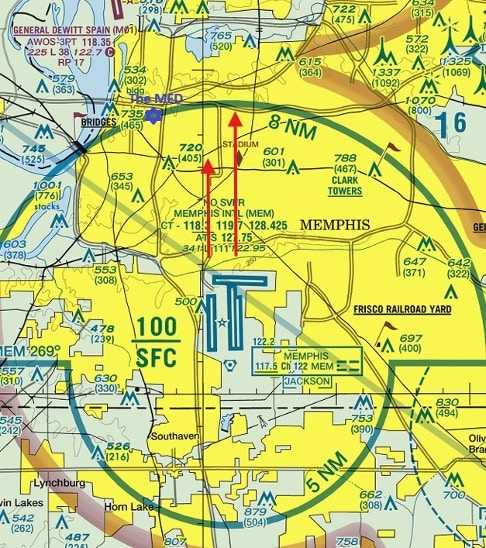
- 0145 Central Time I departed [Helipad} known as just outside of Class Bravo airspace.
- I called Tower: “Tower this is Helicopter [call sign]. Just departed “The Med” requesting a climb to 3,500 direct to Tupelo heading 230.
- Tower: Helicopter [call sign] squawk XXXX….
- I replied, Helicopter [call sign] squawking XXXX.
- Helicopter [call sign] you are cleared through the Class Bravo proceed direct on course.
- I repeated the clearance and proceeded direct on course to Tupelo continuing my climb to 3,500. 7. Tower called out a Southwest aircraft on my 9 o’clock
- I replied I did not have them insight.
- Next thing I know I can see the Southwest heading for me. I make an abrupt stop and quick 180 descending turn to get more distance from the on coming aircraft.
- Tower gives instructions to call the tower when I land for a possible pilot deviation. I believe this could have been avoided if the tower gave me instructions to completely avoid the path of the oncoming aircraft. Instructions such as remain west of the runway centerline until instructed or any other direction than directly toward the Southwest aircraft in the airspace at the time.
ERC Acceptance & Closing Notes:
Company investigated the event internally and reviewed ATC tapes.
- Non-standard verbiage used by both pilots and controller.
- Phone number given to pilots.
- Potential Pilot Deviation.
- Pilots debriefed and counseled on following directions issued by ATC, sterile cockpit.
- Report remains as sole source.
Safety Takeaway:
After the 2025 Potomac Mid-Air collision between PSA airlines jet and U.S. Army helicopter, FAA suspended the use of visual separation between airplanes and helicopters in Class B, C, and TRSAs, requiring radar separation instead. KMEM had parallel runways for takeoffs and landings on this day. Air Traffic and helicopter operations need to establish proper communication and must be aware of each traffic location especially when large airport parallel runways are in use.