
TCAS TA/RA – Traffic
Approaching the NYC metropolitan area to land at the 34th St Helipad (6N5), we followed the Harlem helicopter route as cleared by LaGuardia (LGA) Tower. Near the Class B airspace limit at1,000 feet, LGA Tower advised us of a helicopter maneuvering over the Manhattan Bridge, thenreleased us to the East River CTAF (123.07).
Southbound over the river at roughly 850 feet, we passed the Queensboro Bridge and began a highreconnaissance for our approach. We confirmed our landing configuration, evaluated the winds,and scanned the helipad for traffic, ships, birds, and obstructions. Because winds favored anorthbound landing, we maneuvered to allow room for a 180-degree right turn into the final approach.
Just past Queensboro Bridge, the Traffic Collision Avoidance System (TCAS) alerted us to nearby traffic. As Pilot Not Flying (PNF), I scanned ahead and around the landing site. Noting the TCAS target ahead and to the left, Pilot Flying (PF) promptly initiated a normal right bank. She then sighted a northbound helicopter at our exact altitude, flying in the opposite direction.
We proceeded to a safe, normal landing with no abrupt maneuvers required. The traffic was close enough to identify as an [Operator] helicopter, likely transitioning from the area previously reported by LGA Tower. We never heard any radio calls from them. The helipad ground crew also confirmed they heard no self-reporting from the other aircraft. While this near-miss ended safely, it highlights the critical need to follow published procedures, update altimeter settings, maintain high situational awareness in congested airspace, and utilize dual-crew cockpits. The PF’s prompt avoidance maneuver prevented a potential catastrophe, proving that a second pair of eyes more than doubles safety margins.
ERC Acceptance & Closing Notes:
Sole source. Company had a conversation with the crew. Crew completed company end of day report. Company feels crew responded appropriately – no issues on crew actions, good CRM and awareness.
End of day report has been shared with pilot group. Event is expected to be briefed in next pilot meeting. Company would like to request the FAA reach out to [Operator] [Company Representative] and I had a good conversation last week (4/28) with Farmingdale (NY) FSDO who oversees the operation. [FSDO representative] already had a preliminary call with the [Operator} chief pilot before our conversation. He also followed up with a meeting on 4/29 to discuss in greater detail.
Apparently, the other operator was very receptive to the feedback, and the follow-up meeting was productive.
Safety Takeaway:
Flying in densely populated areas requires strong communication and visual of traffic, especially across different agencies flying around metropolitan areas. As mentioned from the narrative, this event portrays the critical importance of always having two pilots task managing and increasing situational awareness. The other helicopter failed to self-report on the East River CTAF (123.07), highlighting that even when ATC is not managing the traffic, complying with mandatory, proactive self-reporting is vital for situational awareness in congested areas.
Incursion – Taxiway
Operator A – Report
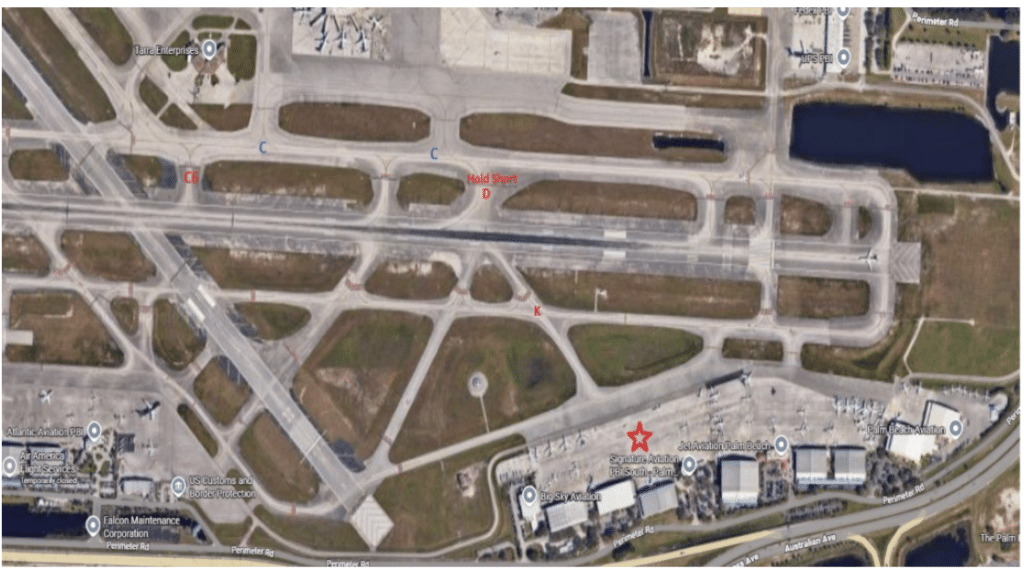
During a night landing rollout on Runway 10L, the tower instructed us to exit at Taxiway K. We missed Taxiway K, exited at L6 instead, and notified ATC. This delay likely contributed to the trailing aircraft being instructed to execute a go-around. Contributing environmental factors included extensive exterior windscreen fogging caused by high humidity. Anticipating this, the crew activated the aircraft defog system during initial descent, but visibility remained degraded. The crew was also operating with awareness of NOTAM PBI 11/055.
Safety Suggestions:
The lead-off lines for Taxiway K are fully obscured and nearly impossible to see at night. Furthermore, this area serves as the primary touchdown zone for Runway 28R and desperately needs rubber removal to restore visual surface markings.
Operator B – Report
After landing on PBI Runway 28R, we exited right via Taxiway C6. ATC issued taxi instructions via C and D, to hold short of Runway 28R at D. After receiving clearance to cross Runway 28R at D, we were instructed to continue via Taxiway K to the Signature FBO. Faded taxi lines caused us to confuse the main taxi path with the lead-in line for Taxiway K. Because the taxiway sign appeared to point toward the runway, we mistakenly taxied toward it. I stopped the aircraft near the runway entry arrow, and ATC immediately noticed the error. ATC instructed us to hold position, which we did. We were then cleared to make a 180-degree turn back toward Taxiway K, cross Runway 28R, and proceed to the Signature FBO without further incident.
Contributing Factors:
Night operations coupled with badly faded taxi lead-in lines over the runway surface.
ERC Acceptance & Closing Notes:
Confusion due to faded taxiway markers and night ops were contributing factors.
Company had debriefed with crew- crew did notify ATC right away.
FAA elevated this to runway safety.
Safety Takeaway:
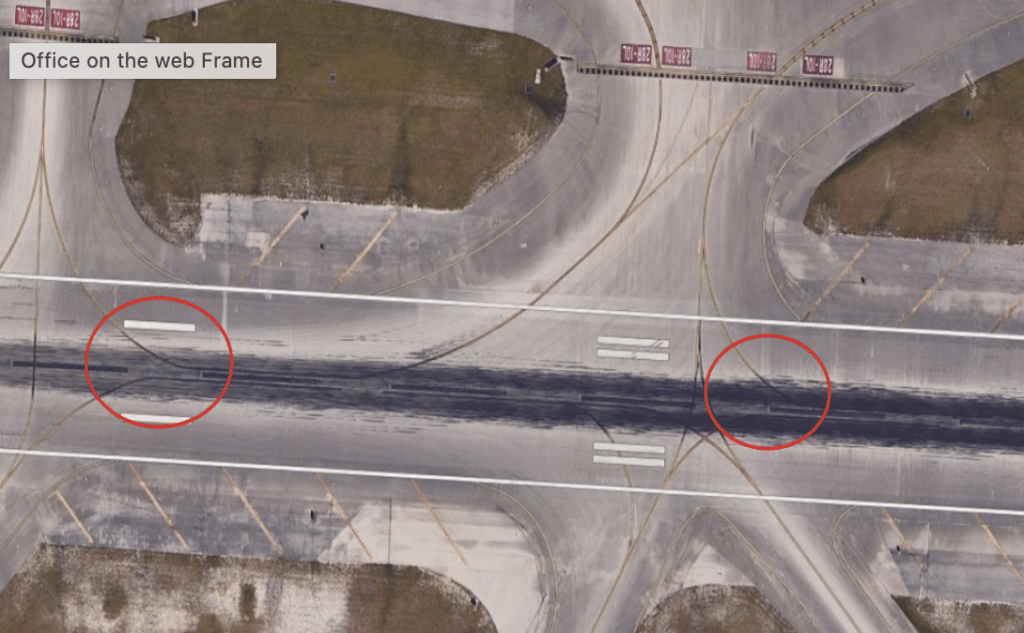
Both reports point out the lead off lights at KPBI(Palm Beach International) were difficult to view due to excess rubber deposits from tires. Pilots may not be able to take advantage of the lead off lights for this reason.
Landing Event – Wet Runway
Airport: KBCT (Boca Raton)
Runway: RWY 05
Approach: RNAV (GPS) RWY 05
Flight Phase: Approach / Landing
Aircraft Type: CL-30
Crew Configuration: PF (Pilot Flying), PM (Pilot Monitoring)
Weather: Heavy rain, low visibility, wet runway with significant standing water.
Flight Narrative
Miami Approach cleared the aircraft to UZAPA at 3,000 feet. The flight descended to 2,000 feet, maintained 1,500 feet, and received a vector of 080 to intercept the final approach course. After establishing on the final approach and intercepting the glidepath, the crew switched to BCT Tower, received wind data, and was cleared to land Runway 05. The approach was stable at a speed of 130 knots down to the Decision Altitude (DA) of 458 feet.
Approximately 100 feet above DA, the PM reported the runway was not in sight and called for a go-around. The PF sighted the approach lights and elected to continue. At DA, the PM went head-up, located in the runway environment (PAPI-R), and called minimums with lights in sight. The PF confirmed visual contact with the runway environment and committed to the landing.
Landing, Rollout, and Outcome
The PF targeted the aiming point markings upon touchdown, applying reverse thrust and careful maximum braking to maintain the centerline. Due to heavy water accumulation, the aircraft experienced severe hydroplaning and degraded braking effectiveness. Deceleration was severely limited.
The aircraft failed to stop within the available landing distance, overran the runway, and entered the clearway. It was brought to a stop by the Engineered Materials Arresting System (EMAS). There was no evidence of fire or emergency lights. The crew reported the excursion to ATC and evacuated the passengers. There were no injuries to the passengers or crew.
Safety Factors Identified
- Adverse Weather: Heavy rain, low visibility, and a wet runway with significant standing water.
- Approach Speed: Excessive speed on final
- Crew Resource Management (CRM): PF continued the landing below DA despite the PM’s initial go-around call.
- Mechanical/Environmental: Severe hydroplaning during the landing roll, leading to degraded braking effectiveness.
- Outcome: Runway excursion/overrun terminated by the EMAS system, reducing standard safety margins.
ERC Acceptance & Closing Notes:
After further investigation, co pilots report is the only report accepted.
Company feels language barrier was a contributing factor.
Company has conducted CRM training.
Safety Takeaway:
Hydroplaning in aviation occurs when tires lose contact with the runway due to a layer of water, slush, or snow, resulting in loss of braking and directional control. Speed management (lowest safe speed) and a firm touchdown are necessary to break the water film and minimize energy. If a runway is excessively wet or flooded, diverting to a more suitable runway may be another option. EMAS(Engineered Materials Arresting System) played a significant role not causing injuries or damage to the aircraft.