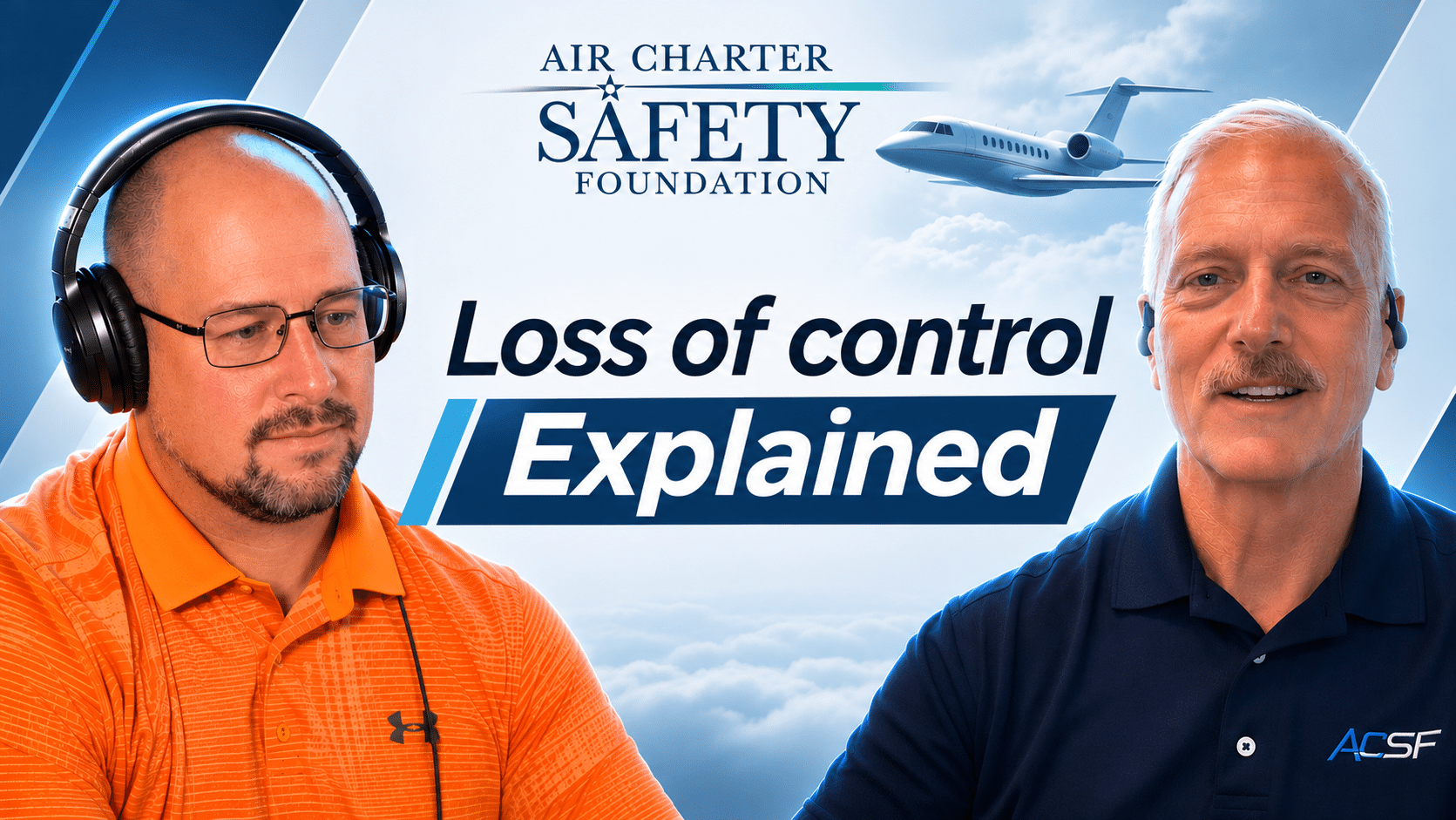
In this episode, Loss of Control Explained, we explore why loss of control in-flight (LOC-I) remains one of aviation’s most serious safety threats and how better training, increased awareness, and proactive risk management can help operators address it.
Join ACSF host Larry Soles and guest Randall Brooks, an experienced aerobatic instructor, corporate pilot, and leader in upset prevention and recovery training (UPRT), as they examine the limitations of conventional pilot training and the importance of preparing crews for unexpected aircraft upsets. Drawing on more than four decades of aviation experience, Brooks explains why even highly experienced pilots can encounter situations beyond their training and how exposure to real-world aircraft behavior can improve their ability to respond. Whether you are a chief pilot, flight department manager, safety professional, or aircraft operator, this conversation offers valuable insights into one of aviation’s most persistent challenges.
Although flight simulators have made extraordinary contributions to aviation safety, Brooks explains that they have limitations when replicating aircraft behavior outside the normal flight envelope. Traditional simulator training often emphasizes recovering at the first indication of a stall rather than experiencing a fully developed aerodynamic stall. As a result, pilots may be unfamiliar with the combination of unusual attitudes, aerodynamic instability, and psychological stress that can accompany an actual upset. Soles and Brooks discuss how surprise and startle responses can further complicate these situations, making realistic training and repeated exposure essential components of effective preparation.
The conversation also examines how operators can evaluate and mitigate loss-of-control risks through their safety management systems. Brooks shares training research demonstrating improvements in pilots’ upset recovery performance and discusses Delta Air Lines’ experience with UPRT, including a reported reduction of more than 50% in precursor events over a five-year period. Soles emphasizes the importance of identifying warning signs before they develop into serious incidents and considering training investments as part of a broader safety strategy. Together, they make the case for treating upset prevention and recovery training not simply as an additional flying skill, but as a meaningful investment in operational risk reduction and a stronger safety culture.
Listen now and join the conversation.
#AviationSafety #BusinessAviation #LossOfControl #UPRT #PilotTraining #ACSF #SafetyCulture